dopamineu

Divergent Minds · Essay Wednesday, November 25, 2026 Volume I

Interest, not deficit

The name of the diagnosis says attention is missing. The research says something more precise: in ADHD, attention follows interest, and the words adults choose shape what children expect of themselves.

Divergent Minds, essayBy the editorsNovember 25, 20266 min read
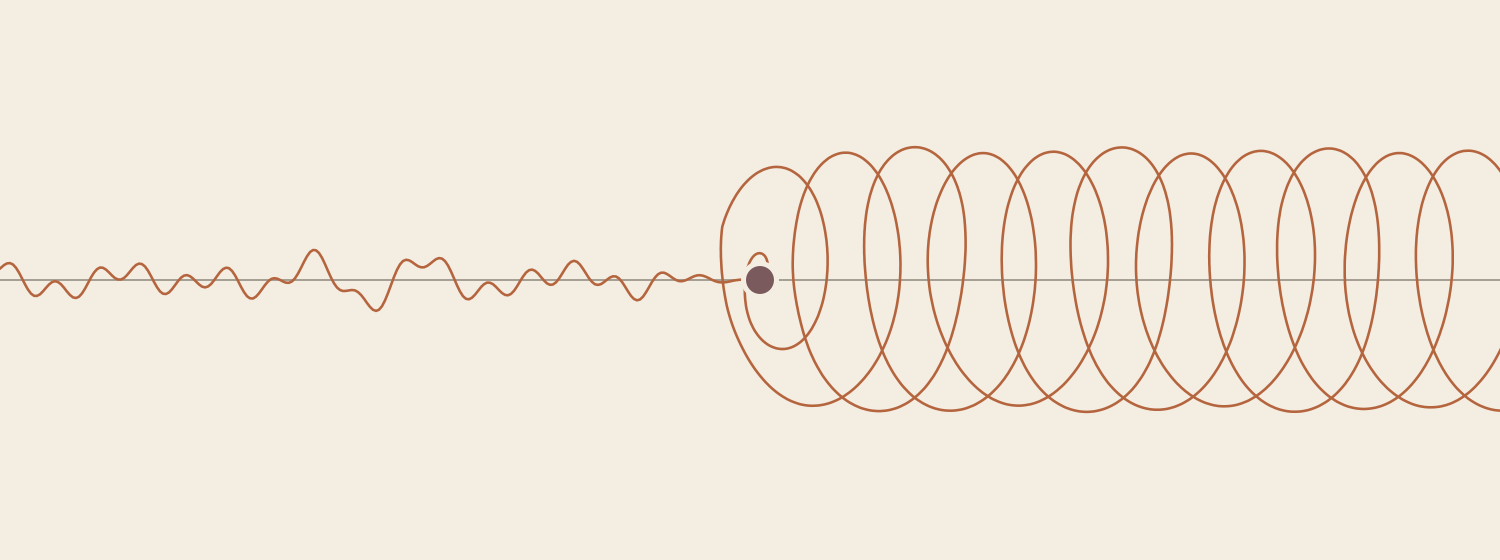
The coil. Asked to attend, the thread scatters; where interest arrives, it coils and holds. See the six cover studies

A boy cannot get through ten minutes of homework. The same evening he spends four hours building a bridge out of cardboard, testing it and building it again. The adults who see both evenings tend to reach for the same word. He has an attention deficit, they say, except when he does not.

The name of the diagnosis, attention deficit hyperactivity disorder, tells a child that something is missing. Many clinicians, and a growing body of research, describe something else: attention that is present and often intense, but steered by interest rather than by importance. This essay sets out that idea, what the evidence supports and what it does not, and why the words we use matter most to the children who hear them.

An engine that runs on interest

Where the idea comes from.

The psychiatrist William Dodson calls it an interest-based nervous system.1 Most people, he argues, can start a task because it is important, because someone they respect asked them to, or because a reward or a penalty is attached. People with ADHD tend to engage when a task is interesting, new, challenging or urgent. That is why a deadline the night before can do what a week of reminders could not.

It is worth being precise about what this is. Dodson's model comes from clinical practice, not from controlled studies, and it has not been tested as a theory in its own right. It is a description many people with ADHD recognize at once. What gives it weight is how well it fits what laboratory research has found about motivation and reward.

The psychologist Russell Barkley has argued since the 1990s that ADHD is a disorder of self-regulation.2 Children with ADHD usually know what they are supposed to do. The difficulty lies in doing it at the moment it is asked for, when nothing about the task pulls them in.

What the brain research shows

Dopamine, reward and the pull to start.

In 2009, a team led by Nora Volkow used brain imaging to compare 53 adults with ADHD who had never taken medication with 44 adults without it. Those with ADHD had fewer markers of dopamine signalling along the brain’s reward pathway, and the lower those markers, the more symptoms of inattention they had.3

A follow-up study linked the same pathway to lower scores on a measure of motivation.4 Its title uses the word deficit, a motivation deficit, and it is worth reading closely. What the authors describe is a system that responds less to ordinary, distant rewards. Put another way, it takes a stronger and nearer pull for the work to begin. That is close to what Dodson describes from the clinic.

A review of 22 studies with 1,181 children found that rewards improved performance and motivation in children with and without ADHD, while physiological measures suggested children with ADHD responded to them less.5 Rewards and interest help everyone. The difference is how much pull a task needs before attention arrives.

These are small studies, and they show associations, not causes. They do not prove the interest-based model. They do show that motivation sits at the center of ADHD, not at its edge. Dopamine, the brain chemical most closely tied to wanting and pursuit, is also where this journal takes its name.

Hyperfocus

The attention nobody calls a deficit.

The same nervous system that cannot stay with a dull worksheet can stay with an interesting problem for hours, sometimes long enough to forget to eat. In a questionnaire study of adults, those with more ADHD symptoms reported this kind of hyperfocus more often, at school, in hobbies and in front of screens.6

Hyperfocus is still poorly understood. A 2021 review called it the forgotten frontier of attention and noted that researchers do not yet agree on a definition.7 It has costs too: it is hard to switch out of, and hours can disappear. But it is plainly not an absence of attention. It is attention with different steering.

Minds that diverge

Knowledge that converges

dopamineu

What a label does

Teachers, expectations and the stories children absorb.

Words change how adults see a child before the child has done anything. In one study, teachers and education students read descriptions of children's behavior; when the same description carried the label ADHD, their reactions were more negative.8 In another, teachers rated students with an ADHD diagnosis as less able in school than students without one, even when their test scores were similar.9

Expectations can then do some of their own work. A review of 35 years of classroom research concluded that self-fulfilling prophecies are real but usually small, and that they can be larger for children from stigmatized groups.10 Children with ADHD are one of those groups. A review of research on ADHD stigma describes it as widespread, from the public to peers and teachers, and as something young people can come to apply to themselves.11

A child told often enough that something is missing will reach the conclusion children reach: something is wrong with me. Effort on hard things starts to look pointless, and low results seem to confirm the story.

None of this makes the diagnosis the enemy. A diagnosis opens the door to support, accommodations and treatment. The harm lies in the story told around it.

“Divergence is not a deficit.”

From episode 01, the founding conversation

Where the word deficit is right

Taking the difficulties seriously.

In 2021, eighty researchers from 27 countries published 208 conclusions about ADHD that the evidence supports firmly.12 They describe a common condition, found across the world, that carries real risks when it goes unrecognized and untreated, and they warn that misconceptions about it delay help.

So interest, not deficit, does not mean nothing is hard. Starting, finishing, keeping time and calming strong feelings can all be hard, every day, and treatment, including medication, helps many people. The argument is about where the difficulty lives. It lives in the mismatch between a nervous system that runs on interest and a world that runs on importance and deadlines, not in a missing part of the child.

Strengths, measured

What happens when people know what they are good at.

Research on the strengths that come with ADHD is young, and its studies are small. Six successful men with ADHD, interviewed at length, described energy, cognitive dynamism, courage, humanity, resilience and transcendence.13 In a Dutch survey, adults with ADHD named 116 different positive aspects of it.14

A 2025 study compared 200 adults with ADHD and 200 without. Those with ADHD were more likely to count creativity, humor and hyperfocus among their strengths. In both groups, people who knew their strengths reported higher wellbeing, better quality of life and fewer symptoms of depression, anxiety and stress.15 It shows an association, not a cause; whether teaching people their strengths improves their lives is the next question to test.

Researchers in education have made the same case for schools: begin from what a child does well, and build the rest from there.16

What to say instead

Words for a child, and for the adults around one.

Describe the engine, not a defect. Say: your attention follows interest, so let's find the interesting part of this. Not: you can't pay attention.

Name what you have seen. Be specific: you stayed with that bridge for four hours. Specific words tell a child what you actually saw.

Build interest into the dull parts. Add something new, a challenge, a clock or a partner. These are not tricks; they are how this nervous system starts.

Keep the diagnosis, change the story. The diagnosis opens doors. Tell the child what it means: a different way of running, with real difficulties and real strengths.

Keep expectations high. Low expectations weigh most on the children who are already stigmatized. Expect a lot, and change the route, not the destination.

The boy with the cardboard bridge is not short of attention. He has plenty, and it goes where it is pulled. The task for the adults around him is not to fix a deficit but to learn what pulls him, to build it into what he has to do, and to tell him the truth: his mind runs differently, it is sometimes harder, and it is often a strength.

The evidence at a glance

What each claim rests on, and how firmly.

ClaimWhat the research showsHow firmSources
Attention in ADHD follows interestA clinical model from practice; it fits the findings on reward and motivationA model, not yet tested directly1
The reward system works differentlyBrain imaging links dopamine markers in the reward pathway to inattention and motivationModerate: small, correlational studies3 4
Rewards change performanceAcross 22 studies, rewards helped children with and without ADHDModerate5
Hyperfocus comes with ADHDAdults with more symptoms report it more oftenEarly: self-report, no agreed definition6 7
Labels change how teachers see childrenLabeled children are judged more negatively and as less ableConsistent across studies8 9 11
Expectations shape resultsSelf-fulfilling prophecies occur; usually small, larger for stigmatized groupsWell established, modest in size10
Knowing your strengths goes with wellbeingStrengths knowledge tracks wellbeing and quality of lifeEarly: association, not cause13 14 15
ADHD brings real difficulties208 conclusions backed by large studies and meta-analysesStrong12

Sources

Every study cited above, with a link to it.

  1. 01William Dodson. Secrets of the ADHD brain. ADDitude. www.additudemag.com/secrets-of-the-adhd-brain/
  2. 02Barkley, R. A. (1997). Behavioral inhibition, sustained attention, and executive functions: constructing a unifying theory of ADHD. Psychological Bulletin, 121(1), 65–94. doi.org/10.1037/0033-2909.121.1.65
  3. 03Volkow, N. D., et al. (2009). Evaluating dopamine reward pathway in ADHD: clinical implications. JAMA, 302(10), 1084–1091. doi.org/10.1001/jama.2009.1308
  4. 04Volkow, N. D., et al. (2011). Motivation deficit in ADHD is associated with dysfunction of the dopamine reward pathway. Molecular Psychiatry, 16(11), 1147–1154. doi.org/10.1038/mp.2010.97
  5. 05Luman, M., Oosterlaan, J., & Sergeant, J. A. (2005). The impact of reinforcement contingencies on AD/HD: a review and theoretical appraisal. Clinical Psychology Review, 25(2), 183–213. doi.org/10.1016/j.cpr.2004.11.001
  6. 06Hupfeld, K. E., Abagis, T. R., & Shah, P. (2019). Living “in the zone”: hyperfocus in adult ADHD. ADHD Attention Deficit and Hyperactivity Disorders, 11(2), 191–208. doi.org/10.1007/s12402-018-0272-y
  7. 07Ashinoff, B. K., & Abu-Akel, A. (2021). Hyperfocus: the forgotten frontier of attention. Psychological Research, 85(1), 1–19. doi.org/10.1007/s00426-019-01245-8
  8. 08Ohan, J. L., Visser, T. A. W., Strain, M. C., & Allen, L. (2011). Teachers’ and education students’ perceptions of and reactions to children with and without the diagnostic label “ADHD”. Journal of School Psychology, 49(1), 81–105. doi.org/10.1016/j.jsp.2010.10.001
  9. 09Metzger, A. N., & Hamilton, L. T. (2021). The stigma of ADHD: teacher ratings of labeled students. Sociological Perspectives, 64(2), 258–279. doi.org/10.1177/0731121420937739
  10. 10Jussim, L., & Harber, K. D. (2005). Teacher expectations and self-fulfilling prophecies: knowns and unknowns, resolved and unresolved controversies. Personality and Social Psychology Review, 9(2), 131–155. doi.org/10.1207/s15327957pspr0902_3
  11. 11Mueller, A. K., Fuermaier, A. B. M., Koerts, J., & Tucha, L. (2012). Stigma in attention deficit hyperactivity disorder. ADHD Attention Deficit and Hyperactivity Disorders, 4(3), 101–114. doi.org/10.1007/s12402-012-0085-3
  12. 12Faraone, S. V., et al. (2021). The World Federation of ADHD International Consensus Statement: 208 evidence-based conclusions about the disorder. Neuroscience & Biobehavioral Reviews, 128, 789–818. doi.org/10.1016/j.neubiorev.2021.01.022
  13. 13Sedgwick, J. A., Merwood, A., & Asherson, P. (2019). The positive aspects of attention deficit hyperactivity disorder: a qualitative investigation of successful adults with ADHD. ADHD Attention Deficit and Hyperactivity Disorders, 11(3), 241–253. doi.org/10.1007/s12402-018-0277-6
  14. 14Schippers, L. M., et al. (2022). A qualitative and quantitative study of self-reported positive characteristics of individuals with ADHD. Frontiers in Psychiatry, 13, 922788. doi.org/10.3389/fpsyt.2022.922788
  15. 15Hargitai, L. D., et al. (2025). The role of psychological strengths in positive life outcomes in adults with ADHD. Psychological Medicine, 55. doi.org/10.1017/S0033291725101232
  16. 16Climie, E. A., & Mastoras, S. M. (2015). ADHD in schools: adopting a strengths-based perspective. Canadian Psychology, 56(3), 295–300. doi.org/10.1037/cap0000030

This essay is not medical advice. If you think you or your child may have ADHD, talk with a clinician who knows it well.